Government · 5 min read
How to apply for the new NTSA reflective number plates
Apply for the new-generation digital reflective number plates on eCitizen: the process, the fee and what happens to your old plates.
By Dismus Nganyi · Published 8 November 2026
Need a hand with your NTSA booking or transfer?
Want to handle it yourself? Continue with the guide.
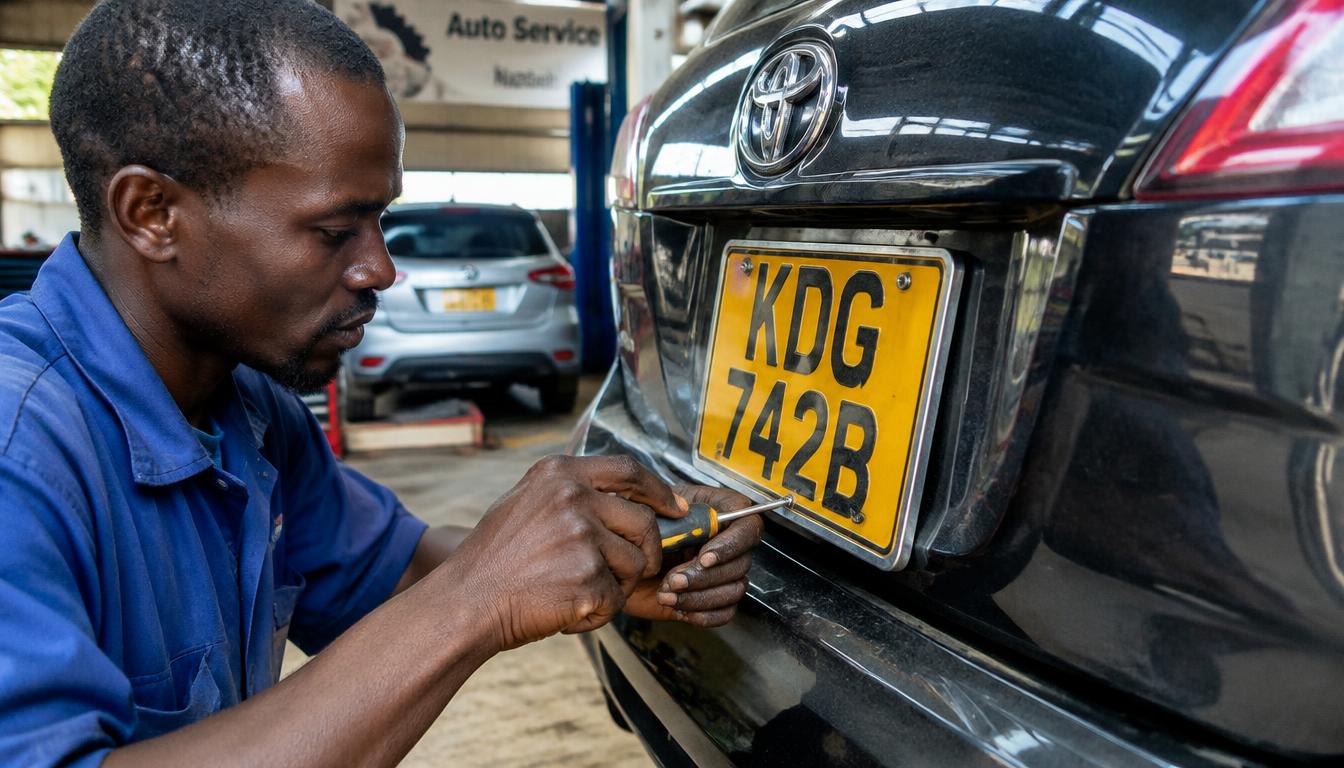
Kenya’s new-generation number plates come with security features that make them harder to clone, helping police trace vehicles and reducing plate fraud. Application is done through the NTSA section of eCitizen, and the plates are fitted at designated centres. The widely published fee has been KSh 3,000 per pair — confirm the figure on your eCitizen invoice, as official charges can change.
What you need
- An eCitizen account linked to the vehicle
- The vehicle’s current number plates and logbook details
- Your National ID
- M-Pesa or another payment option shown at checkout
Steps to apply
- 1Sign in to eCitizen and open National Transport and Safety Authority (NTSA).
- 2Open the reflective or new-generation number plate service.
- 3Select the vehicle and confirm its details are correct.
- 4Choose a fitting centre and any appointment options shown.
- 5Pay the official invoice and save the receipt.
- 6Take the vehicle to the fitting centre when called, with your ID and the old plates.
At the fitting centre
The old plates are surrendered when the new ones are fitted — you do not keep them. The new plates are linked to your vehicle’s record in the NTSA system. Confirm the fitting is recorded before you leave the centre.
Common questions and problems
- Vehicle not in your account: it may be linked to an old TIMS account — see our linking guide
- Personalised or special plates: these follow a different process and cost more — ask NTSA directly
- Bought a used vehicle: complete the ownership transfer first, then apply for plates in your name
Why the plates are changing
The new-generation plates carry security features that link each plate to the vehicle’s record, making cloned plates easier to detect. Cloning has been used to hide stolen vehicles and to shift fines and crimes onto innocent owners — you may have heard of someone receiving a penalty for a car that was never in that town. The new plates are part of closing that loophole.
Have your details ready and want help with the process? Talk to Cyber Kenya on WhatsApp →
Costs and payment safety
The widely published fee has been KSh 3,000 for a pair, but treat your eCitizen invoice as the final word because official charges change. Payment is made only through the official checkout, and the receipt is worth keeping with your vehicle documents. There is no legitimate ‘agent fee’ for plates — the process is a direct application in your own account.
After the plates are fitted
Confirm the new plate numbers match your vehicle’s record in the NTSA portal — a mismatch can cause problems at checkpoints and during transfers. Update your insurance policy with the new registration if it changed, and tell your tracker company if you have one. If you later sell the vehicle, the plates go with it; the transfer process in the system handles the change of ownership.
Special cases: companies, saccos and new imports
Vehicles registered to companies apply through the company’s eCitizen account, and the person handling it needs the company’s documents in order. Newly imported vehicles normally receive the new plates at first registration, so there is nothing extra to apply for. If your vehicle is in a sacco fleet, check whether the sacco coordinates plate applications for members — some do, and it saves individual queues. In every case, the principle holds: the application lives in the registered owner’s account, and payment is through the official invoice only.
If your plates are damaged or stolen
A faded, bent or stolen plate is its own problem, separate from the new-generation rollout. Report stolen plates to the police immediately — plates are used in crimes, and your report dates your innocence. Then follow the NTSA process for replacement plates through eCitizen. Driving with one plate or a handmade replacement attracts attention at every checkpoint, so treat replacement as urgent, and keep the police abstract with you until the new plates are on.
A quick recap
The process is straightforward when done through the right channel: sign in to your own eCitizen account, open the NTSA plate service, confirm your vehicle, pay the official invoice and attend the fitting with your ID and old plates. Confirm the record updates afterwards, and update insurance and tracker details if the registration changed. Done this way, the new plates are a small errand — done through shortcuts, they become an expensive lesson in fraud.
Tip: Do not buy ‘new-generation’ plates from roadside sellers. Genuine plates come only through the NTSA process and are fitted at designated centres.
Keep your passwords, reset links and one-time codes private. Cyber Kenya can guide you and prepare details, but you complete sign-in and verification yourself. Any official government charge is separate from Cyber Kenya’s assistance fee.