
Government · 6 min read
NTSA Road Service Licence (RSL): what it is and how to apply
Who needs a Road Service Licence — matatu saccos, bus companies, school and staff transport — and how to apply through eCitizen.
By Dismus Nganyi · Published 8 November 2026
Need a hand with your NTSA booking or transfer?
Want to handle it yourself? Continue with the guide.
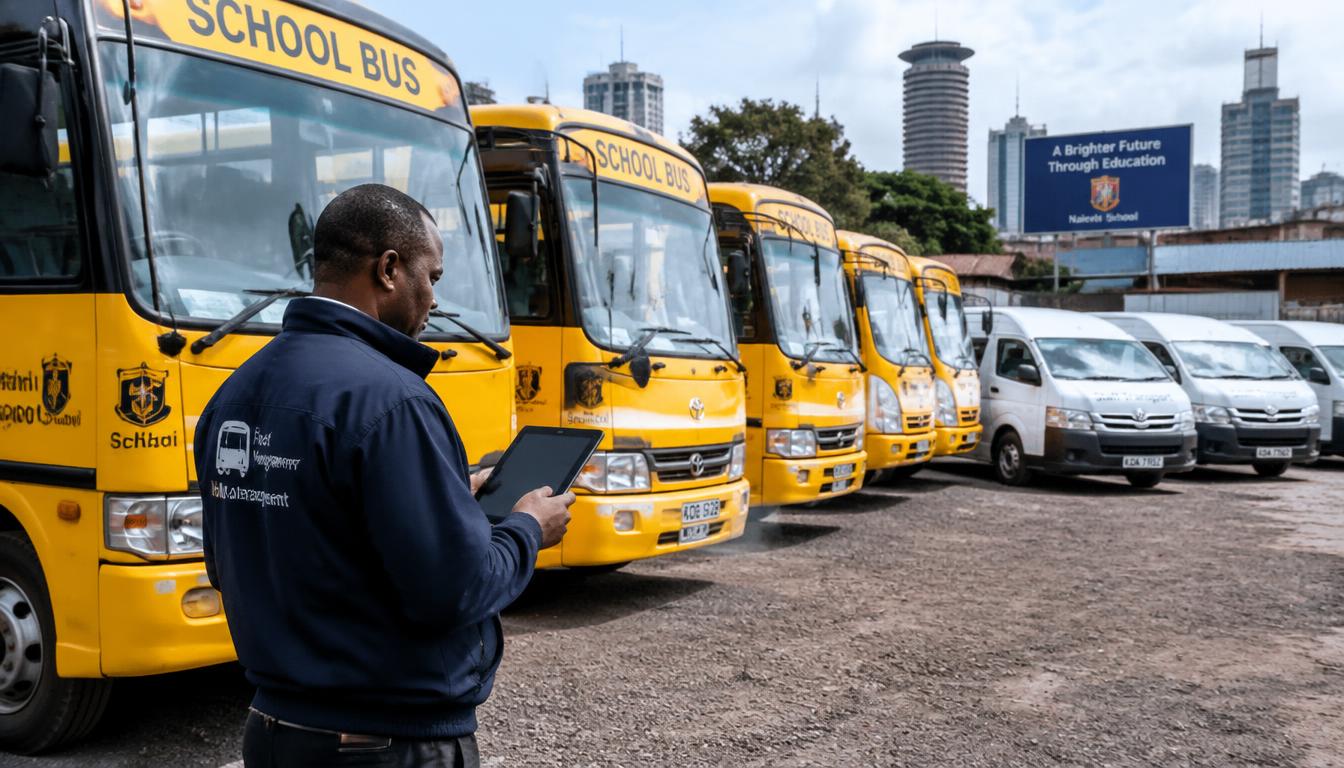
A Road Service Licence (RSL) is the NTSA licence that allows a vehicle to operate as a public service vehicle on Kenyan roads. It is separate from the driver’s PSV badge: the badge covers the driver, the RSL covers the vehicle and its operation. Matatu saccos, bus companies, school buses and staff transport vehicles all fall under this requirement.
Who needs an RSL
- Matatus and buses carrying fare-paying passengers
- School buses and institutional transport
- Staff transport vehicles operated by companies
- Tour and shuttle vehicles carrying passengers for hire
What you need to apply
- The vehicle must be registered and have a valid inspection
- The operator’s details — sacco or company registration where applicable
- Route details for the service you will operate
- Insurance valid for PSV use
- An eCitizen account for the owner or the registered operator
Steps to apply
- 1Sign in to the eCitizen account of the vehicle owner or operator and open National Transport and Safety Authority (NTSA).
- 2Open the Road Service Licence service and start a new application.
- 3Select the vehicle and confirm its records are clean — inspection and registration must be up to date.
- 4Enter the route and operation details asked.
- 5Upload the supporting documents requested.
- 6Pay the official invoice and save the receipt.
- 7Track the application in the portal and follow any instructions from NTSA.
Keeping the licence valid
The RSL runs for a set period and must be renewed. Operating without a valid RSL risks fines and the vehicle being ordered off the road. Keep the vehicle’s inspection current — an expired inspection can block your RSL renewal.
RSL versus the other NTSA documents
Three documents confuse PSV operators because they sound similar. The driving licence covers the driver as a motorist. The PSV badge covers the driver as a passenger-carrying professional. The RSL covers the vehicle’s operation as a public service vehicle — the route, the operator, the service. A compliant matatu has all three in order, plus a valid inspection and PSV insurance. Missing any one of them is enough to be ordered off the road.
Have your details ready and want help with the process? Talk to Cyber Kenya on WhatsApp →
Getting the application right the first time
Most RSL delays come from mismatched records: the vehicle registered to one name, the sacco membership under another, the eCitizen account under a third. Before applying, line up the ownership record, the operator’s registration documents and the account that will submit the application. If the vehicle is changing saccos, complete that change first. An application built on clean records moves; one built on mismatches bounces between offices.
Compliance after licensing
The RSL is not a one-time hurdle. Renew it before expiry, keep the vehicle’s inspection current, and operate on the licensed route — route violations are a common reason operators are penalised. If your operation changes, for example a new route or a different vehicle, update the licence rather than hoping the old one stretches. Keep copies of the licence in the vehicle; checks ask for it.
Common application mistakes
- Applying before the vehicle’s inspection is current — the RSL checks depend on it
- Route details that do not match the sacco’s licensed routes
- Uploading expired insurance or insurance not covering PSV use
- Applying under a personal account when the vehicle is company-registered
Each of these sends the application back and costs you weeks. A careful hour of preparation — checking the vehicle record, the insurance wording and the account — is the difference between a smooth approval and a file that travels between desks. When the portal rejects something, read the reason given and fix exactly that, rather than resubmitting the same documents and hoping.
For schools and companies running transport
Institutions feel RSL compliance differently from saccos. A school bus grounded for an expired licence is a safeguarding issue, not just a transport one, and parents will ask hard questions. Assign one administrator to own the transport compliance calendar: RSL renewals, inspections, insurance and driver badges in one register, reviewed every term. Keep copies of every licence and receipt in the vehicle file. When an inspector or a parent asks, the file answers in minutes — and that readiness is what keeps a small oversight from becoming a public problem.
A quick recap
The RSL licenses the vehicle’s work, just as the badge licenses the driver. Apply through the owner’s or operator’s eCitizen account with inspection, insurance and route details in order, pay the official invoice and track the application in the portal. Renew before expiry and keep copies in the vehicle. Operators who keep these basics current rarely meet an enforcement officer with bad news — the licence is the quiet foundation under every legal trip.
Tip: If your vehicle belongs to a sacco, confirm who holds the eCitizen account for applications. Many delays come from applying under the wrong account.
Keep your passwords, reset links and one-time codes private. Cyber Kenya can guide you and prepare details, but you complete sign-in and verification yourself. Any official government charge is separate from Cyber Kenya’s assistance fee.