Government · 6 min read
NTSA vehicle inspection fees and requirements in Kenya
What inspection costs for private cars, PSVs and commercial vehicles, and the documents to carry to the inspection centre.
By Dismus Nganyi · Published 8 November 2026
Need a hand with your NTSA booking or transfer?
Want to handle it yourself? Continue with the guide.
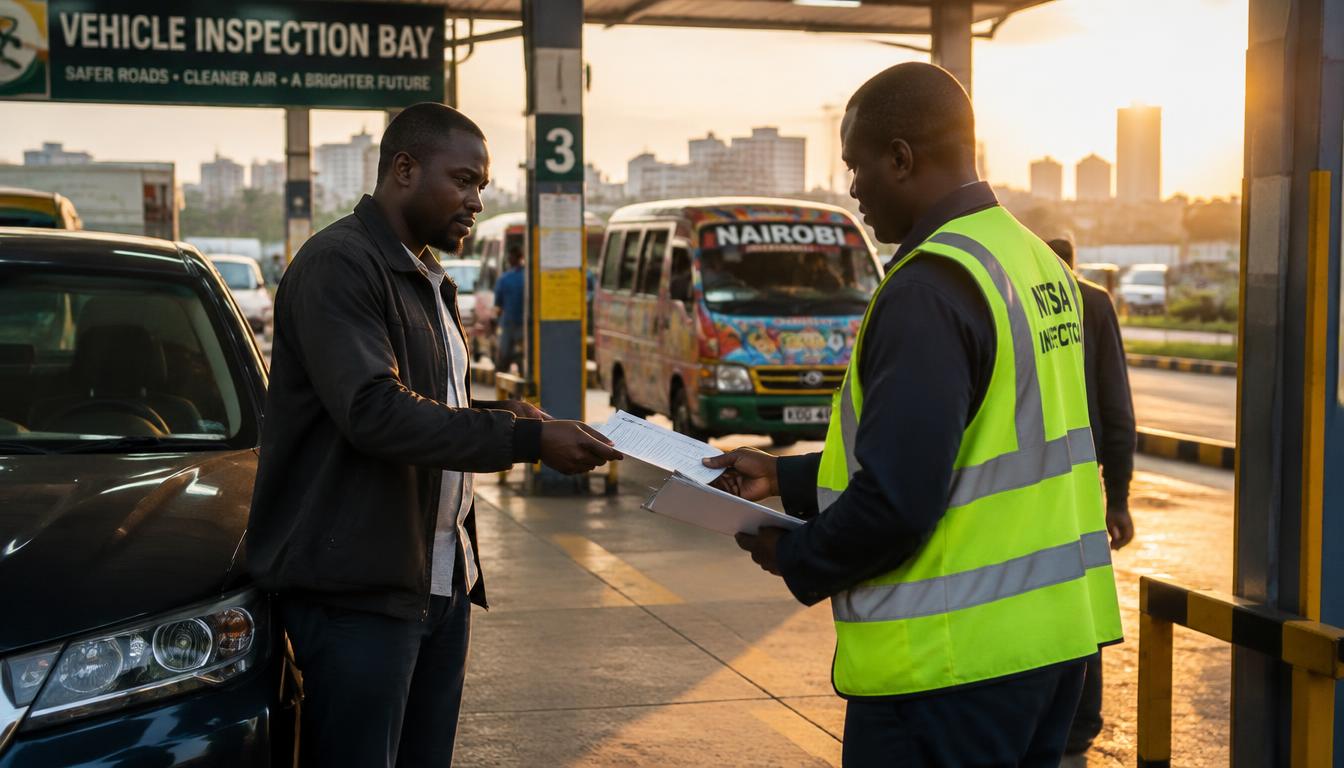
Inspection fees are not the same for every vehicle. A small private car, a matatu and a heavy commercial lorry are inspected under different schedules, and the invoice reflects that. Because amounts are revised from time to time, this guide explains how the fees work and what you must carry — and tells you where to confirm the exact figure.
How inspection fees work
- Private vehicles: inspected when changing ownership, after certain modifications, or when directed — not on the old annual schedule
- PSVs (matatus, buses, taxis): periodic inspection is part of staying roadworthy and licensed
- Commercial and heavy vehicles: periodic inspection applies, with classes based on weight and use
- Motorcycles and three-wheelers: inspected under their own classes
The exact amount for your vehicle is the one shown on the eCitizen invoice when you book. That figure already includes any convenience charges shown at checkout. Treat any other quoted figure — including old blog posts and posters — as out of date until the invoice confirms it.
Documents to carry
- The booking confirmation and payment receipt from eCitizen
- Your National ID (or the registered owner’s, where required)
- The original logbook or proof of ownership for first inspections and change of ownership
- A valid insurance certificate for the vehicle
- For PSVs and commercial vehicles: any licence documents the centre asks for, such as the Road Service Licence
What inspectors check
Inspectors examine the vehicle’s identity and condition: chassis and engine numbers against NTSA records, brakes, lights, steering, tyres, body condition and safety equipment. PSVs get extra checks on items like seatbelts, speed governors and fire extinguishers.
If the vehicle fails
- 1Read the inspection report carefully — it lists each defect.
- 2Fix the defects with a qualified mechanic and keep the repair receipts.
- 3Rebook the inspection on eCitizen and pay the re-inspection invoice shown.
- 4Take the vehicle back with the report and receipts.
Have your details ready and want help with the process? Talk to Cyber Kenya on WhatsApp →
Why the invoice is the only reliable figure
You will see inspection fees quoted in Facebook groups, on noticeboards and in old articles — including figures that were correct when written. Government charges are revised, and convenience charges are added at checkout. The only figure that matters is the one eCitizen shows on your invoice at the moment you book. If anyone asks you to pay a different amount to a personal number, that is not the inspection fee — it is a scam.
Preparing your vehicle to pass
A day or two before the inspection, have your mechanic check the items inspectors look at most: brake performance and handbrake hold, all lights and indicators, tyre condition and matching sizes, steering play, windscreen cracks in the driver’s view, and oil or fuel leaks. Wash the vehicle, especially the underside and engine bay, so the chassis and engine numbers are easy to read. A vehicle that arrives clean and well-prepared moves through the lane faster.
Extra requirements for PSVs and commercial vehicles
Passenger and goods vehicles carry extra responsibilities. PSVs are checked for seatbelts, a serviced fire extinguisher, a working speed governor where required, and the condition of seats and emergency exits. Commercial vehicles may need their load body and safety markings in order. Ask your sacco, fleet manager or the inspection centre what applies to your class before the day, so you do not fail on something small.
Budgeting for the whole exercise
The inspection fee is only part of the cost. Budget for the pre-check and any repairs, fuel to the centre, and the possibility of a re-inspection fee if the vehicle fails. For PSVs, add the cost of a day off the road. Planning for the full amount — not just the invoice — is what keeps a routine inspection from becoming a financial emergency. And remember: every shilling goes through official channels with receipts, so your records stay clean for insurance and resale.
Questions to ask before you book
A two-minute check saves a wasted trip. Confirm the vehicle’s class so you book the right inspection type. Confirm the registered owner’s account is the one you will use. Confirm the centre handles your vehicle class — some centres do not take heavy commercials. And confirm your documents are current, especially insurance. If any answer is unclear, ask at the centre or through the NTSA support channels before paying, not after.
Tip: Do a pre-check with your mechanic before the booking: brakes, lights, tyres and visible leaks cause most failures.
Keep your passwords, reset links and one-time codes private. Cyber Kenya can guide you and prepare details, but you complete sign-in and verification yourself. Any official government charge is separate from Cyber Kenya’s assistance fee.